Driving Poultry Sector Growth through My Work under the Uttarakhand Poultry Development Policy
The policy promotes modern poultry entrepreneurship through attractive subsidies, technical support, and a transparent online approval system, welcoming investors from India and abroad
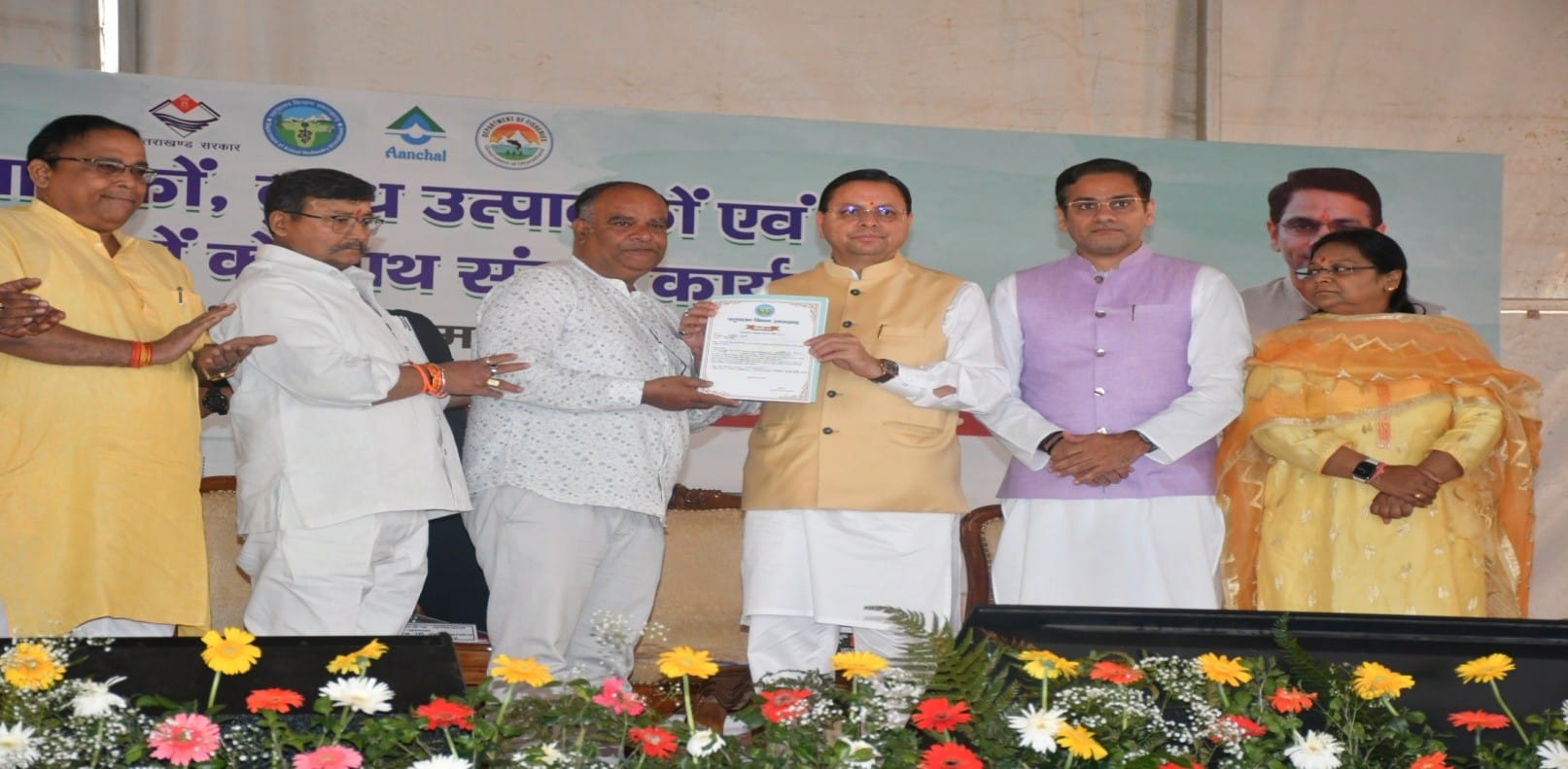
Scheme Name: Uttarakhand Poultry Development Policy
· Department: Animal Husbandry Department
· Year of Launch: 2025
· Approval: GO No. No. 588/XV-1/25/62949 dated 09 June 2025
· Geographical Coverage: All districts of Uttarakhand
· Status: Ongoing
Problem Addressed and Objectives
To promote private investment in the poultry sector, to enhance poultry meat and egg production in the State, to generate employment and entrepreneurship opportunities, to reduce dependence on poultry products imported from other States, to strengthen the poultry value chain in Uttarakhand.
Scheme Design and Key Interventions
Target Beneficiaries- for 05 years (2025-2030)
| Unit | Plain | Hill | Total |
|---|---|---|---|
| Commercial Layer Farm | 17 | 18 | 35 |
| Broiler Parent Farm | 9 | 10 | 19 |
| Total | 26 | 28 | 54 |
Eligibility
No domicile restriction, NRI's and entrepreneurs from other countries are also eligible, individual/ partnership/groups /companies(including start ups) are also eligible, applicants must possess suitable land (owned or leased) as per Policy norms.
Subsidy Pattern
· Subsidy commercial layer farm- Max. Rs 54 lakhs / unit for plain and Rs 48.00 lakh/unit for hills.
· Subsidy Broiler parent farm- Max. Rs 63 lakhs /unit for plain and Rs 56 lakhs / unit for hills.
Technical Guidance and Training
The Animal Husbandry Department will provide technical guidance, project handholding, and training through reputed institutions to support scientific and modern poultry farming.
Application, Approval and Implementation Process
Applications are submitted online through the Apuni Sarkar Portal and are processed through the Pre-Appraisal Committee, Appraisal Committee, Project Approval Committee (PAC), and the High-Powered Committee, as applicable under the Policy.
Financial Outlay and Expenditure
· Financial assistance is provided under the Policy.
· Capital subsidy of 30% (Plain) and 40% (Hill) is available as per Policy provisions.
Physical Outputs
· In F.Y. 2025-26 – 08 beneficiaries selected
· In F.Y. 2026-27 - 03 beneficiaries selected
Employment and Livelihoods Generated
Expected to create 450–500 direct and 3,000–3,500 indirect employment opportunities across the poultry value chain.
Ground-Level Outcomes and Impact
Implementation of approved poultry projects has commenced.
· The Policy is expected to attract private investment, strengthen poultry infrastructure, and promote employment in the State.
Present Status and Way Forward
· The Policy is under implementation across the State and approved poultry projects are being established under the Policy.
· Continued efforts will focus on attracting investment, increasing poultry production, and generating sustainable employment.
Success Stories of Uttarakhand Poultry Development Policy
Remote border villages of Uttarakhand often face limited market opportunities, affecting the income and livelihood security of local farmers. To address this challenge, the Farmer-to-ITBP Integrated Supply Chain Initiative was introduced under the Vibrant Village Programme. On 30 October 2024, the Uttarakhand Animal Husbandry & Fisheries Department entered into an agreement with the Indo-Tibetan Border Police (ITBP), creating a direct institutional market for local farmers.
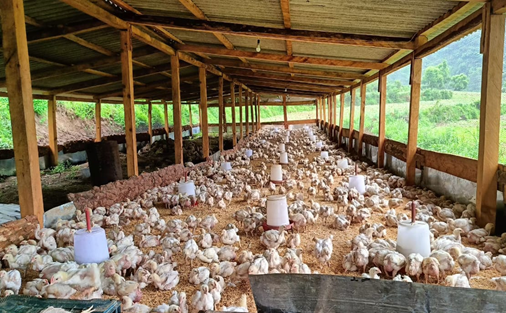
The initiative enables farmers to supply live goats and sheep, poultry, and trout fish directly to ITBP units deployed in Uttarakhand’s border areas. It promotes the “Vocal for Local” approach by linking local production with assured demand, transparent procurement and timely payments.
Shri Vijay Kantura, a poultry farmer from Sira Gadoli, Chinyalisaur, Uttarkashi, is a notable beneficiary of the initiative. Earlier, he depended on the local unorganised market, where prices and demand were uncertain. With a farm capacity of 5,000 birds, his estimated earnings were around ₹6.00 lakh per production cycle, based on an average sale price of ₹120 per kg.
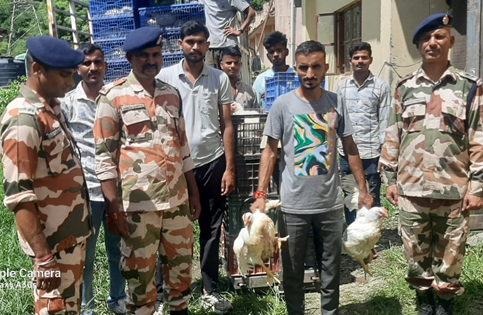
Following his integration into the ITBP supply chain, he gained access to an assured buyer and received payments directly into his bank account within 24–48 hours. With greater market certainty, he increased his production capacity to 6,000 birds per cycle, while the assured procurement price rose to ₹135 per kg. His estimated income consequently increased to ₹8.10 lakh per cycle, an improvement of ₹2.10 lakh or approximately 35%.
To date, Shri Vijay Kantura has supplied 33,619.725 kg of poultry to ITBP formations and received ₹45,95,377.78 through direct bank transfers.
His journey demonstrates how assured markets, transparent pricing and timely digital payments can improve farmers’ earnings and encourage sustainable livelihood opportunities in remote border communities.