My Contribution and Key Outcomes in Advancing the Uttarakhand Fodder Policy
Ensuring year-round fodder security to improve livestock productivity and strengthen farmers' livelihoods in Uttarakhand
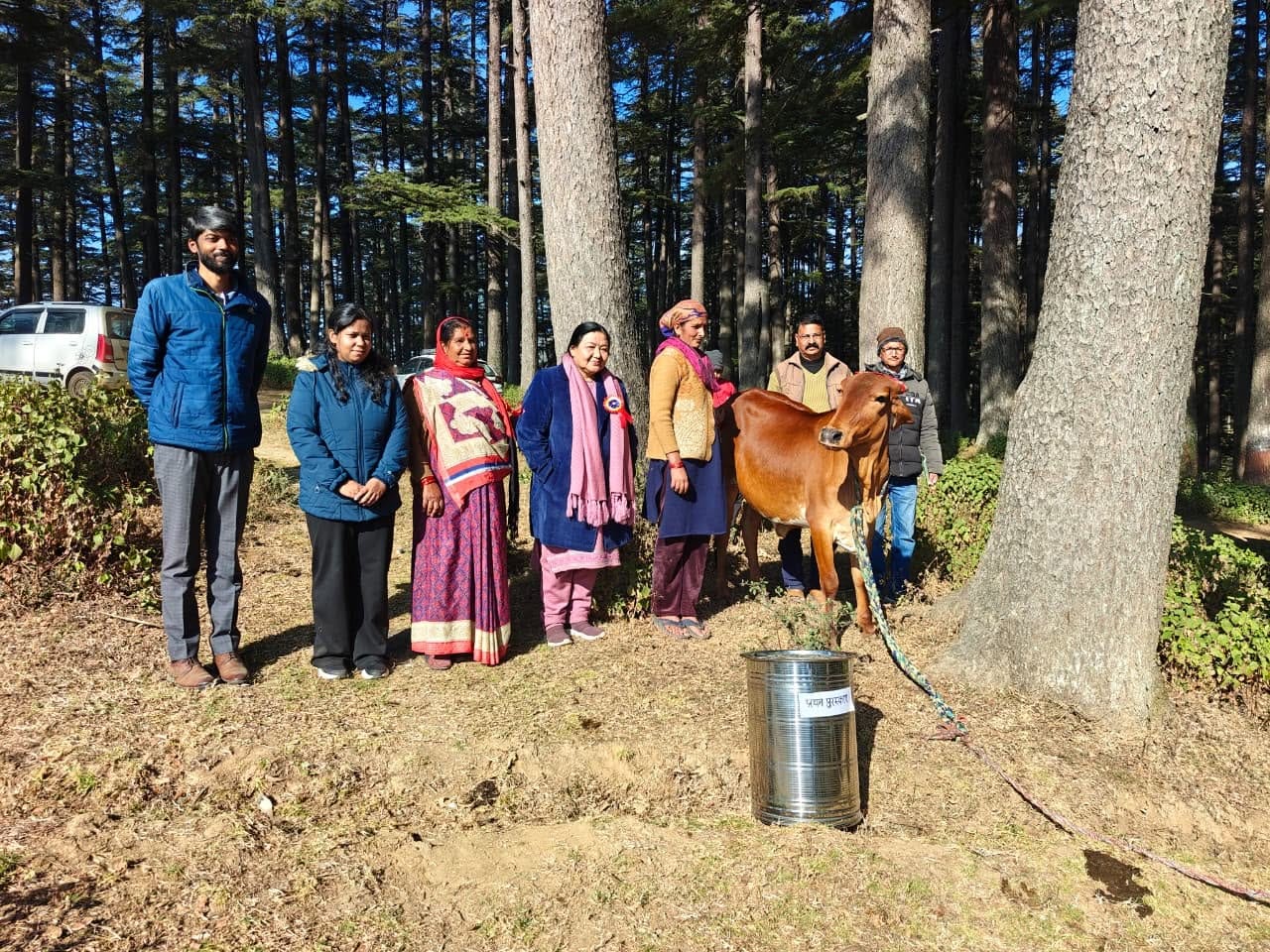
Scheme Name: Uttarakhand Fodder Policy
· Department: Animal Husbandry Department/ Dairy Development Government of Uttarakhand
· Year of Launch: 2023 (policy period 2023–28)
· Approval: GO No. 818/XV-1/2023-6(6)2010/ dated 10 May. 2023
· Geographical Coverage: Statewide, all 13 districts
· Status: Ongoing (short‑term interventions under implementation; mid/long‑term)
Problem Addressed and Objective
Year‑round fodder deficit in the State dependence on forests/CPRs and crop residues; seasonal green fodder shortfall and low fodder area (only 31.9 thousand ha under fodder crops).
Objectives
To mitigate the fodder deficit (green and dry fodder ), improvement in livestock out-put and animal health in the state.
Scheme Design and Key Interventions
Target beneficiaries: Small/marginal livestock owners, women, dairy cooperative members, FPOs.
Eligibility: Livestock owners of Uttarakhand state.
Assistance: Subsidised fodder seed/planting material(100%) ; capital grants for commercial silage units; support for community silage pits and fodder banks; chaff‑cutters; compact feed block procurement; subsidised cattle feed for milk‑fed members.
Delivery mechanism & partners: All AH hospitals, LEO Centers, Dairy Dept, cooperatives, KVKs, FPOs, JICA‑NPDD/NDDB/NCDC funding partners.
Financial Outlay and Expenditure
Planned investment: short/mid/long term interventions done by convergence with JICA‑NPDD/NDDB/NCDC, IFAD, and state sectors.
Key line items: Seed distribution (State sector ₹4.00 crore proposed); silage commercial units, Rs 4/kg for plain and Rs 6/kg for hills subsidy on cattle feed and 50 % subsidy on Straw used in Compact Feed block.
Current utilisation: Distribution of Seed, Compact feed & silage activities already funded under State/JICA/ NDDB/ NCDC/ IFAD streams.
Physical Outputs
Fodder seed distribution (target 5 years): Progress: AH: 1,294 qtl/annum seed distributed; Dairy Dept: 1,500 qtl/ annum seed distributed;. Estimated green fodder production from these interventions: AH 10.8 lakh qtl/annum; Dairy 12.40 lakh qtl/annum. Silage unit: 5 commercial silage bankers established; 2 silage baler machines procured; silage distributed (Jul 2021– june 2025): 34,933 MT; additional distribution figures show 58,230.06 qtl distributed through milk unions.Chaff‑cutters distributed: 300 manual and 20 motorized units reported.FPOs/ storage: 3 FPOs under NDDB established; two godowns completed (JICA/RIDF support).
Employment and Livelihoods Generated
Direct jobs: Construction/operation of silage units, fodder banks, compact feed units creates jobs
Entrepreneurship: Input for Dairy industries as green, dry and concentrate also emerging as self‑employment options.
Inclusion: Program design prioritises women/SHGs and dairy cooperative members; show significant women participation in silage and seed multiplication activities.
Ground‑Level Outcomes and Impact
Policy targets vs early results: Increase availability of Green, dry and concentrate to livestock owners of the state have increased local availability.
Livestock productivity: Field reports indicate milk yield improvements in demonstration villages where silage and quality fodder availability increased.
Implementation Challenges and Corrective Action
Challenges: Transport/logistics in hill terrain; Corpus fund of Rs. 10 cr. for natural calamities and emergency situations.
Corrective actions taken: Increase availability of high yielding certified seeds of fodder crops.
Present Status and Way Forward
Short‑ term measures (seed distribution, silage distribution, chaff‑cutters, initial FPOs and godowns) under implementation; mid‑term compact feed units in tendering/approval stage. Under long term 5 Lakh fodder grass slips plantation and increase availability perennial fodder grass seed and planting material.
Success Stories of Fodder Policy
Success story of the fodder seed distribution scheme program operated in Animal Husbandry Department, Haridwar district
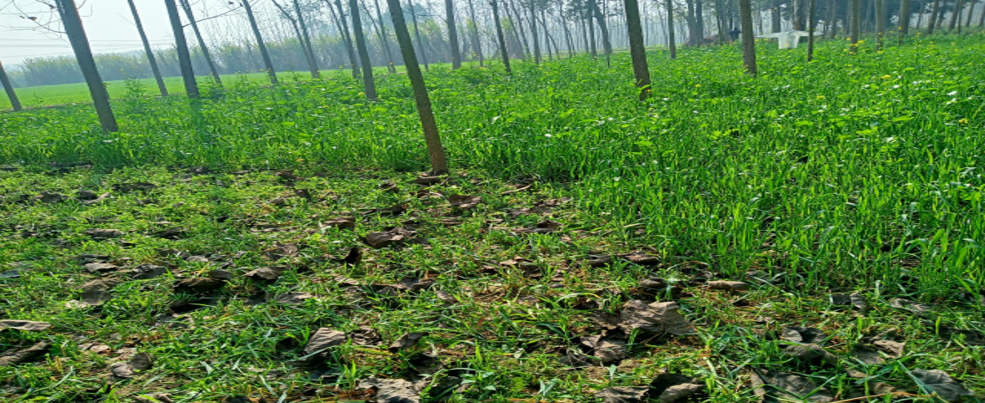
Shri Dilawar Singh son of Shri Karam Singh, Khanpur district Haridwar is a farmer and Livestock owner having 20 bighas of land and takes some land on lease for fodder production in order to run the milk production business. He has 2 milch buffalo and 3 cows. He told that earlier he used to buy fodder seeds from local shop for fodder production. But germination and growth of the seeds was not good and the production of green fodder was also very less due to which more cattle feed had to be given to the animals as the production of green fodder was less. Along with increase in the cost of milk production, more land had to be used for green fodder with less milk production.
Under the fodder seed distribution scheme of Animal Husbandry Department, the livestock owners got high yielding certified seeds of seasonal fodder crops viz., kent verity of oats in rabi and African tall of maize in Zaid and Rabi season from Government Veterinary Hospital Khanpur. The livestock owner told that the germination of both the types of seeds was very good and the yield was also very good. The height of oats was about 4.5-5 feet and the height of maize was also 7-8 feet. The green fodder production of oats has been about 32-34 quintals per bigha (400-425 quintals/hectare) and the green fodder production of maize has been 40-42 quintals per bigha (500-525 quintals/hectare). By sowing certified seeds more production and productivity per unit area was high and achieve more fodder from same land and milk production has also increased by 15-20 percent and the cost of the cattle feed requirement has reduced by 20-25 percent. At present, per cow milk production is 12-14 liters of milk and 10-12 liters of milk per buffalo. In this way, livestock owner has benefited from the Fodder seed distribution scheme.
Success Story of fodder bank operated in Animal Husbandry Department, Haridwar district
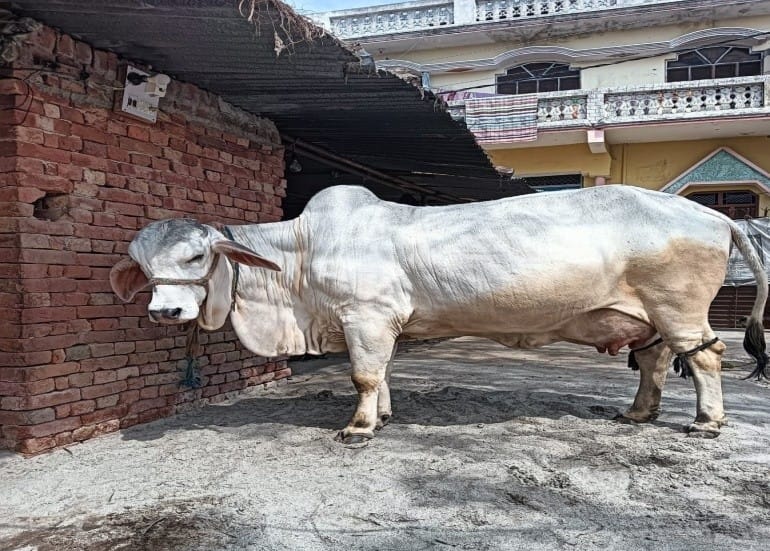
Mr. Sachin Choudhary son of Mr. Sukhbir Singh, Village Nayamatpur, Block-Khanpur is a farmer and livestock owner from Haridwar district. He has 10 milch cows. Out of which 4 are Tharparkar and 6 are Gir breed of cows. He told that earlier he used to feed green fodder and straw for feeding animals. To which animals did not eat fodder completely and hence had to be fed cattle feed repeatedly. At that time milk production was less and the cost of fodder and cattle feed was high and a big storage house was required to keep the straw.
The livestock owner told that by purchasing compact fodder blocks from the fodder bank located in the Government Veterinary Hospital Khanpur of the Animal Husbandry Department, required less space and cost with respect to wheat straw. When the livestock owner started feeding compact fodder blocks and UMMB blocks to his lactating cows, he told that due to the presence of molasses in the compact fodder blocks, the cow feed it completely, due to which milk production has increased by 15-20 percent and the cost of feeding has decreased by 30-35 percent. At present, the milk production of his Tharparkar cow is 15-17 liters per cow per day and the milk production of Gir cow is 16-20 liters per day / per cow. The livestock owner is getting compact fodder blocks on subsidy from the fodder bank and is supplying UMMB blocks on the demand. Also, in case of any disaster like drought/flood etc., the fodder bank supplies compact fodder blocks to the livestock owner. In this way, the livestock owner are getting benefits from the fodder banks.