Key Outcomes and Impact of My Work under the Gramya Gausevak Yojana
The growing challenge of stray male cattle by promoting animal welfare, community participation, and sustainable rural livelihoods
Scheme Name: Gramya Gausevak Yojana (Pilot Project)
· Department: Animal Husbandry Department, Government of Uttarakhand
· Approval: GO No. 138/XV-1/2023/-1(23)/2011 dated 27 February 2023 (Scheme initiated)
· Approval: GO N. 36254/XV-1/23/7(14) 22 dated 26 June 2023 (Enhancement from Rs 30 to Rs 80 per Destitute Animal per day)
Utilization of ₹10 Crore Cess Fund (₹1 per Liquor Bottle) for Maintenance of Destitute Cattle
Government has created a dedicated corpus by levying a cess of ₹1 per liquor bottle, generating approximately ₹10 crore annually. This fund is exclusively utilized for the maintenance, feeding and welfare of destitute cattle under the scheme.
· Geographical Coverage: State-wide (implemented in all districts through Urban Local Bodies, Panchayati Raj Institutions and registered Gaushalas/Gosadans)
· Status: Ongoing
Problem Addressed and Objective
· Male cow progeny is undesired assets for farmers.
· Uttarakhand has witnessed an increase in stray Male cow Progeny and calves due to abandonment, reduced grazing areas, and changing agricultural practices.
· This has resulted in crop damage, road accidents, animal suffering, and public inconvenience.
· The increasing number of stray cattle has emerged as a major concern across rural and urban areas and on Char Dham Yatra routes Uttarakhand.
· Crop damage.
· Road accidents involving stray cattle.
· Animal welfare issues due to inadequate feeding and healthcare.
· The growing population of destitute cattle has become a major challenge due to crop damage, road accidents and inadequate animal care.
· The increasing number of abandoned, stray and unproductive cattle has resulted in crop damage, road accidents, animal welfare concerns and pressure on local bodies.
· There was a need for scientifically managed shelters for safe housing and care of such animals.
Target Beneficiaries
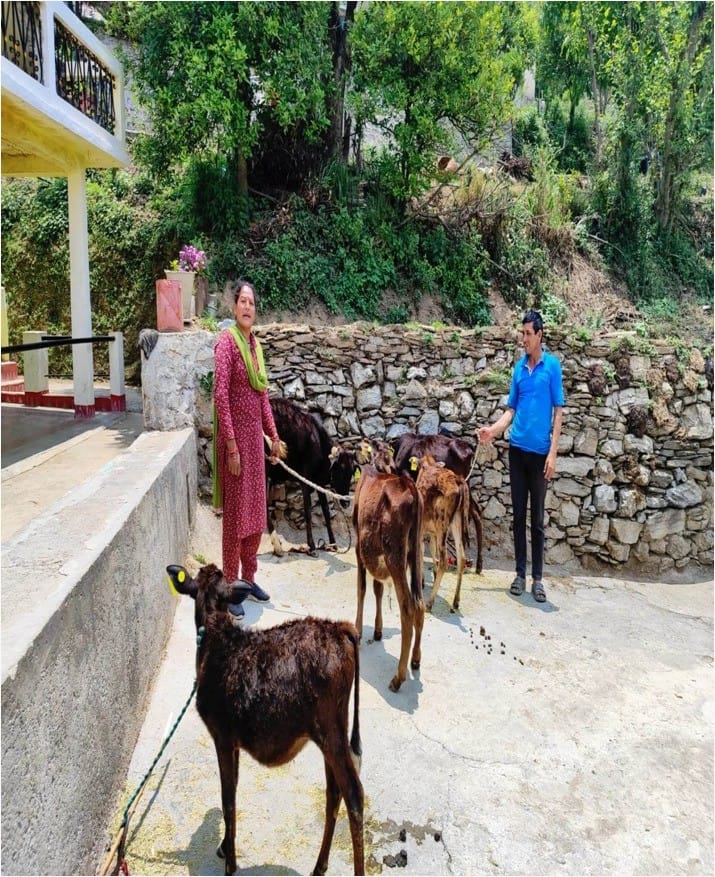
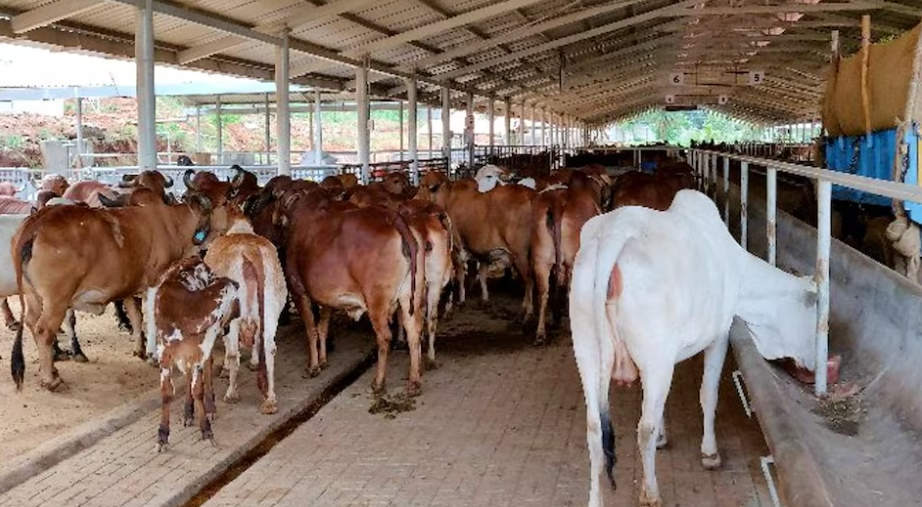
Destitute (Nirashrit) cows, bulls and calves maintained at the village level through Gosala/ Gausadan and Gramya Gau Sevaks.
· Registered Gaushalas/Gosadans
· Urban Local Bodies
· Gram Panchayats
Eligibility:
· Any registered Samiti/ Trust/Organization
Assistance Provided:
· Government Financial assistance for construction of Gosadan infrastructure.
· Category1—Government land and owner should be local body—100% Government contribution for construction.
· Category 2 – Government land but registered Gosala -40% by registered gosala and 60% by District committee.
· Category 3—Land other than government either owned by trust or leased for 50 years– 40% by gosasala and 60% by District committee.
· Category 4—Pre-exist gausala strengthening 40% by gausala and 60% by District commeetee.
Above % of expenditure as per norm of Uttarakhand Government.
· Financial assistance - 46 lakh for 50 cattle and 66 lakh for 100 cattle capacity along with land developmental charges as per applicable for construction of gosadan.
Delivery Mechanism:
· Funds released by the State Government through the Uttarakhand Pashu Kalyan Board.
· Implementation monitored by the Animal Husbandry Department and District Administration.
Distinctive Features:
· Focus on animal welfare and scientific cattle management.
· Convergence with local bodies and animal welfare institutions.
· Reduction of stray cattle through permanent shelter infrastructure.
Objectives
· Reduce the number of stray male cow progeny in villages.
· Improve animal welfare through community participation.
· Generate rural employment through trained Gausevaks.
· Ensure proper maintenance of destitute cattle.
· Reduce stray cattle on roads and agricultural fields.
· Reduce the road accidents due to destitute animals.
· Strengthen village-level participation in cattle welfare.
· To establish permanent Gosadans for the shelter and welfare of destitute /stray and abandoned cattle.
· To reduce stray cattle menace and minimize crop losses and road accidents.
· To promote scientific management, health care and welfare of rescued cattle through institutional support.
Scheme Design and Key Interventions
· Identification and registration of stray male cattle.
· Rescue, Transportation, feeding and health monitoring.
· Coordination with Gram Panchayats, Gaushalas, and the Animal Husbandry Department.
· The scheme is implemented through Gosadan/ Gosala /Gramya Gau Sevaks,
· Identification and registration of destitute cattle.
· Daily feeding, watering and shelter management.
· Coordination with Gram Panchayats and Veterinary Officers.
· The cess fund is utilized through the Animal Husbandry Department for implementing the Gosadan/ Gramya Gau Sevak Yojana.
· Provision of maintenance assistance for destitute cattle.
· Veterinary treatment, vaccination and disease prevention.
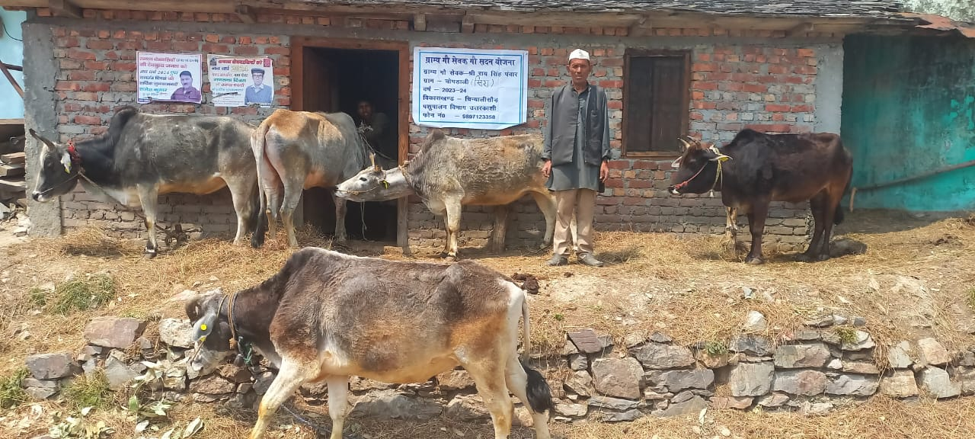
· Engagement of Gramya Gau Sevaks for daily management.
· Monitoring and record maintenance to ensure transparency and accountability.
Financial Outlay and Expenditure
· Implemented initially as a pilot project with government support.
· Financial assistance provided for Gausevak honorarium, cattle care, and operational activities. Rs. 80.00 per day per animals maximum 5 male cattle (Maximum Rs. 12000.00 per month honorarium per Gausevak)
· Convergence with existing schemes related to animal husbandry, Gaushalas, and rural development to optimize resources.
|
Year |
Gramy
Go sevak |
Total
male cattle |
Expenditure In
Lakh |
|
2026-26 |
220 |
431 |
126 |
|
2026-27 |
319 |
550 |
170(approx.) |
Financial Outlay and Expenditure
Year | Total expenditure (Rs. in lakh) |
2022-23 | 105 |
2023-24 | 271 |
2024-25 | 426 |
2025-26 | 491 |
2026-27 | 600 (sanctioned) |
· The revised financial support substantially strengthens the implementation of the scheme.
· Expected Utilization on Fodder procurement.
· Veterinary medicines and first aid.
· Maintenance of cattle sheds.
· The enhanced allocation reflects the Government's commitment towards scientific and humane management of destitute cattle.
· For year 2025-26 ₹10 crore was allocated and utilized.
· For year 2026-27, also ₹10 crore allocated.
· Daily maintenance and feeding of cattle.
· Purchase of green and dry fodder.
· Support for Gramya Gau Sevaks and operational expenses. The dedicated funding mechanism ensures sustainable implementation without interruption.
Year | No. gosadan benefited | No. of cattle sheltered |
2022-23 | 40 | 9559 |
2023-24 | 60 | 12802 |
2024-25 | 70 | 13488 |
2025-26 | 95 | 17890 |
2026-27 | 108 | 19500 |
Physical Outputs
· In Year 2025-26, 220 Gramy gausevak and In year 2026-27 till now , 99 Gramy gausevak hs been established.
· 319 Gramy Gau sevak has been established and approximately 550 male cow progeny animals are taken care.
· 48 female and 271 male gramy gausevak are registered.
· Cattle tagged and health records maintained.
Year | No. gosadan benefited | No. of cattle sheltered |
2022-23 | 40 | 9559 |
2023-24 | 60 | 12802 |
2024-25 | 70 | 13488 |
2025-26 | 95 | 17890 |
2026-27( Till date) | 108 | 19500 (approx.) |
· Reduced mortality among destitute animals.
· Increased number of cattle covered under the scheme.
· Regular vaccination and disease surveillance.
· Healthier and more productive indigenous cattle population.
· Improved feeding and nutrition of destitute cattle.
· Better shelter and sanitation facilities.
· Regular veterinary care and vaccination.
· Registration and monitoring of cattle under the scheme.
Year | Approved Outlay (₹ lakh) | Expenditure (₹ lakh) |
2025-26 | 500 | 500 |
2026-27 | 700 | 700 expected |
Beneficiary Contribution: /As per Government norms.
Employment and Livelihoods Generated
· Creation of local employment opportunities for rural youth as Gausevaks.
· Improved livelihood opportunities linked to organic manure, and cattle-based rural enterprises.
· The scheme creates employment opportunities at the village level by engaging Gramya Gau Sevaks.
· Additional employment in fodder production and transportation.
· Income opportunities for local farmers supplying fodder.
· Community participation in cattle welfare.
· The scheme has created employment opportunities through the engagement of Gosaan/Gramya Gau Sevaks.
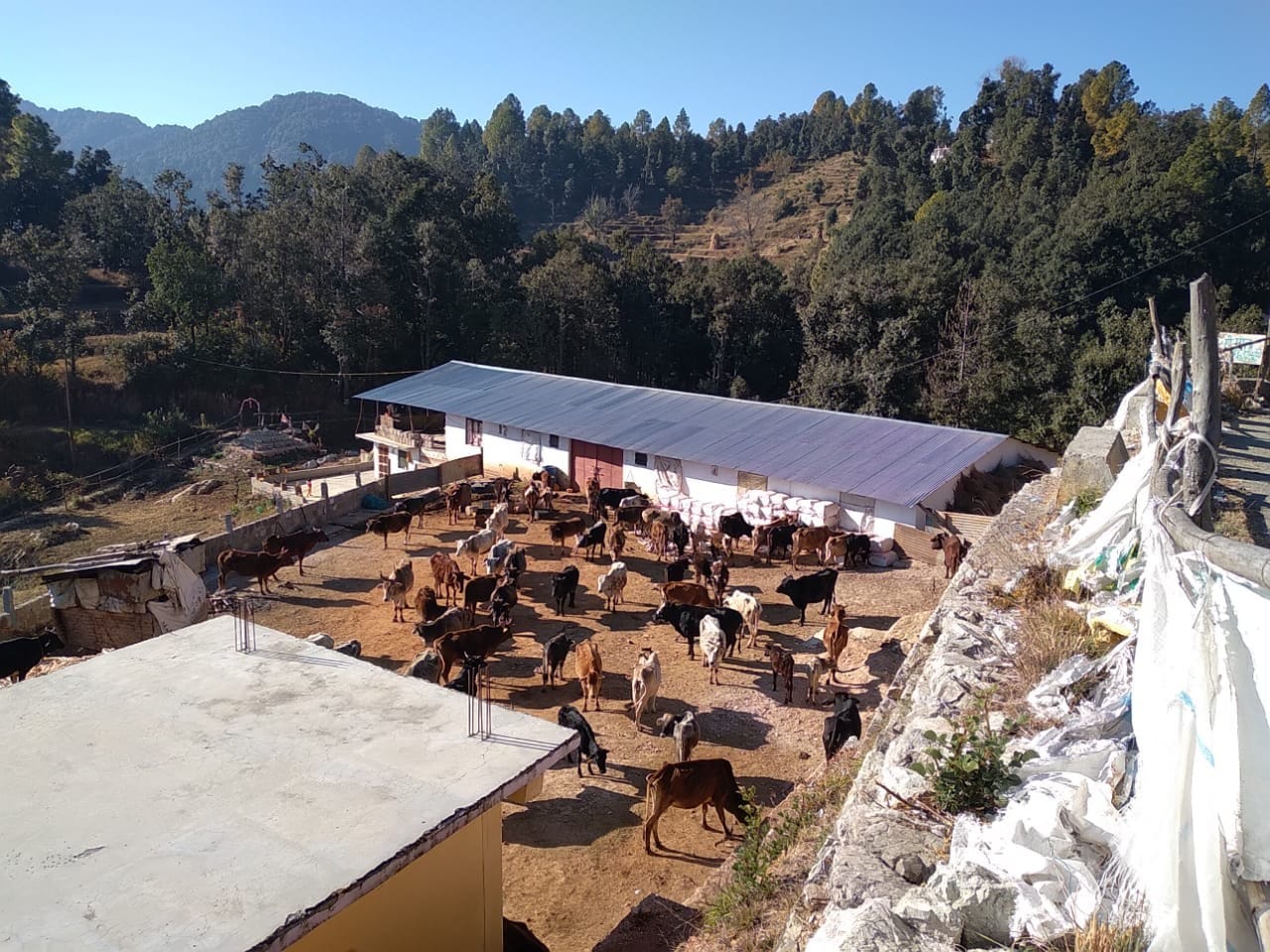
· Direct employment generated through construction activities and management of Gosadans. Every gosadan provides at least 10-15 persons employment for routine management
· Indirect employment created in fodder supply, veterinary services, sanitation and maintenance. Every gosadan provide at least 30-40 persons indirect employment.
Ground-Level Outcomes and Impact
· Reduction in the number of stray male cow progeny on roads.
· Fewer cattle-related road accidents and improved public safety.
· Reduction in crop damage and financial losses to farmers.
· Better health and welfare of rescued cattle through regular veterinary care.
· Improved cleanliness, reduced plastic ingestion by cattle, and greater community participation in cattle management.
· The enhancement from ₹30 to ₹80 per day is expected to produce significant improvements.
· The dedicated cess fund has improved the overall management of destitute cattle.
· Improved shelter facilities for stray and abandoned cattle.
· Reduction in stray cattle on roads and agricultural fields in intervention areas.
· Improved animal health, feeding and veterinary care.
· Strengthened institutional capacity for cattle welfare and rescue operations.
· Enhanced public safety and reduced crop damage.
Key Outcomes
· Better nutritional status of cattle.
· Improved animal health and welfare.
· Reduction in stray cattle movement.
· Decrease in crop damage.
· Fewer road accidents caused by stray cattle.
· Greater public confidence in Government initiatives.
Evidence and Success Stories
· Improved response to cattle-related complaints.
· Enhanced cooperation among villagers, Panchayats, veterinary staff, and Gaushalas.
· Farmers have experienced reduced crop losses.
· Community participation has increased significantly.
· The enhanced financial support has made the scheme more practical and sustainable.
· Significantly improves the welfare of destitute cattle.
· Villages where the scheme is operational have reported improved cattle management, greater community participation.
Success Stories of Gram Gaon Sevak Yojana
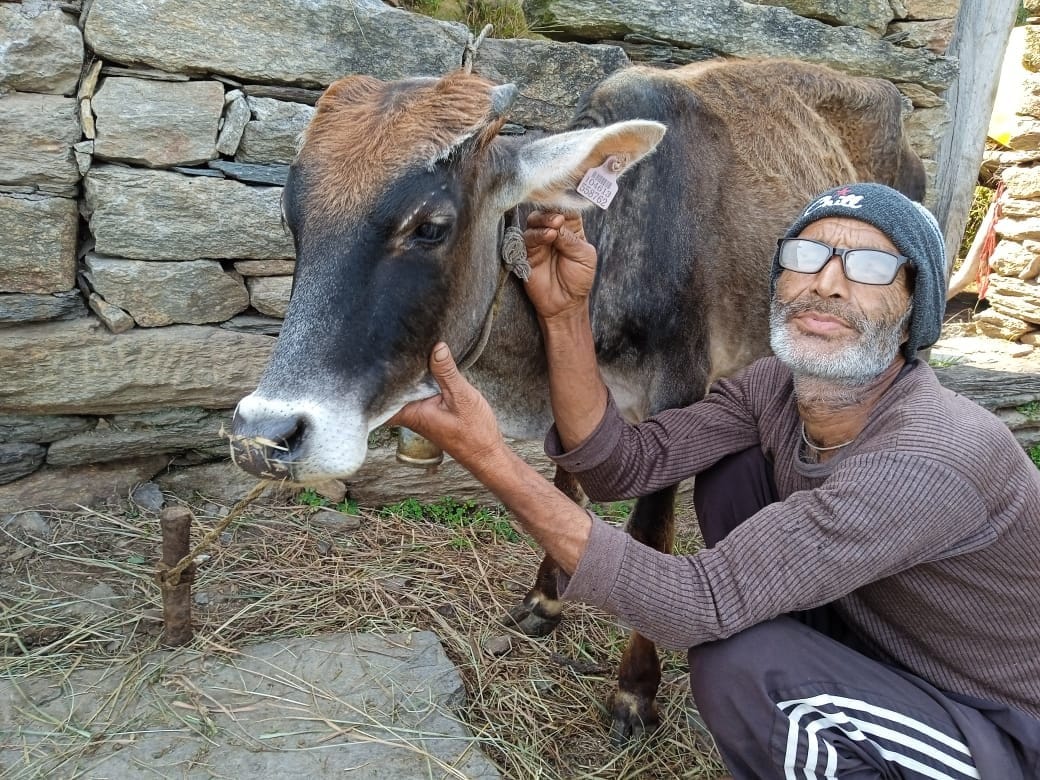
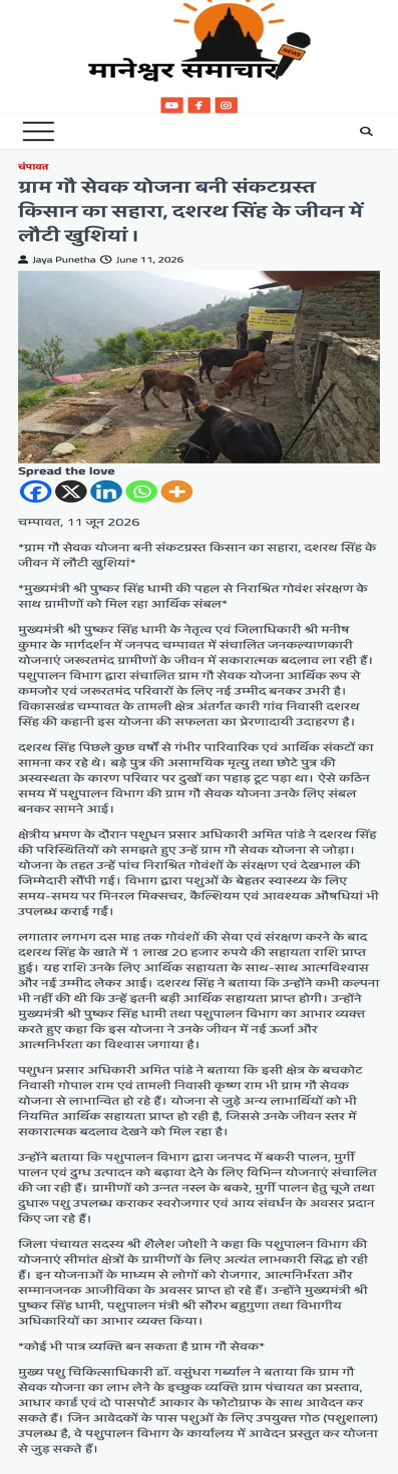
Name of the beneficiary- Shri Dashrath Singh S / o Shri Ganga Singh Gram-Kari, Tamli, V.H.- Champawat,
Dist- Champawat M.No.8859695640
Financial benefit received- Rs. 0.146000.00 (Rupees One Lakh Forty Six Thousand only)
Details of Beneficiaries before the Scheme:
Shri Dashrath Singh was facing severe family and financial crisis for the last few years. The untimely death of the elder son and the ill-health of the younger son had caused a mountain of sorrow to the family. In such difficult times, the Gram Gau Sevak scheme of the Animal Husbandry Department came out as a strength for them.
Details of Beneficiaries after the Scheme:
Shri Dashrath Singh said that he had never imagined that he would receive such huge financial assistance. Expressing gratitude to Chief Minister Shri Pushkar Singh Dhami and the Animal Husbandry Department, he said that this scheme has infused new energy and confidence of self-reliance in their lives.
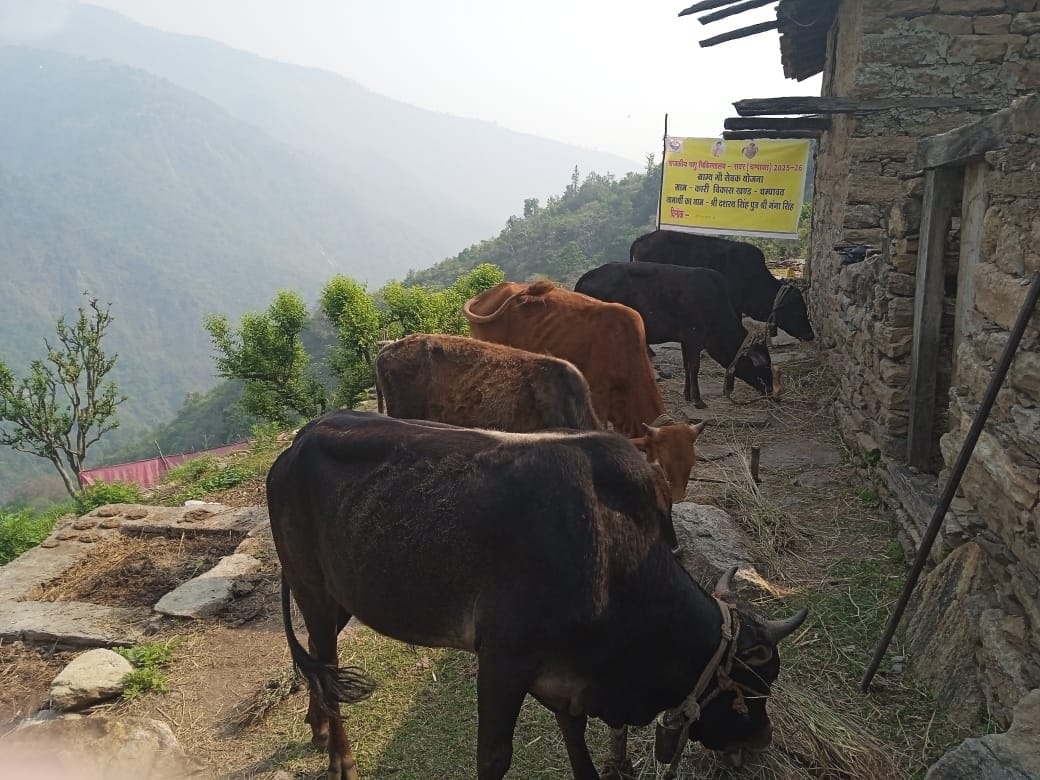
· Significantly improves the welfare of destitute cattle.
Villages where the scheme is operational have reported improved cattle management, greater community participation.
Implementation Challenges and Corrective Action
Challenges:
· Limited Gaushala capacity.
· Financial sustainability.
· Seasonal fodder shortages.
· Lack of owner accountability for abandoned cattle.
· Difficult terrain in hill districts.
· Identification of all destitute cattle.
· Continuous monitoring at village level.
· Timely release of funds.
· Proper documentation and verification.
Corrective Measures
· Strengthen cattle identification and owner registration.
· Expand Gaushala infrastructure.
· Improve fodder availability.
· Capacity building of Gausevaks.
· Regular monitoring using digital reporting systems.
· Digital registration and monitoring of cattle.
· Regular inspections by Veterinary Officers.
· Timely fund disbursement.
· Strengthened coordination among Gram Panchayats, Gaushalas and the Animal Husbandry Department.
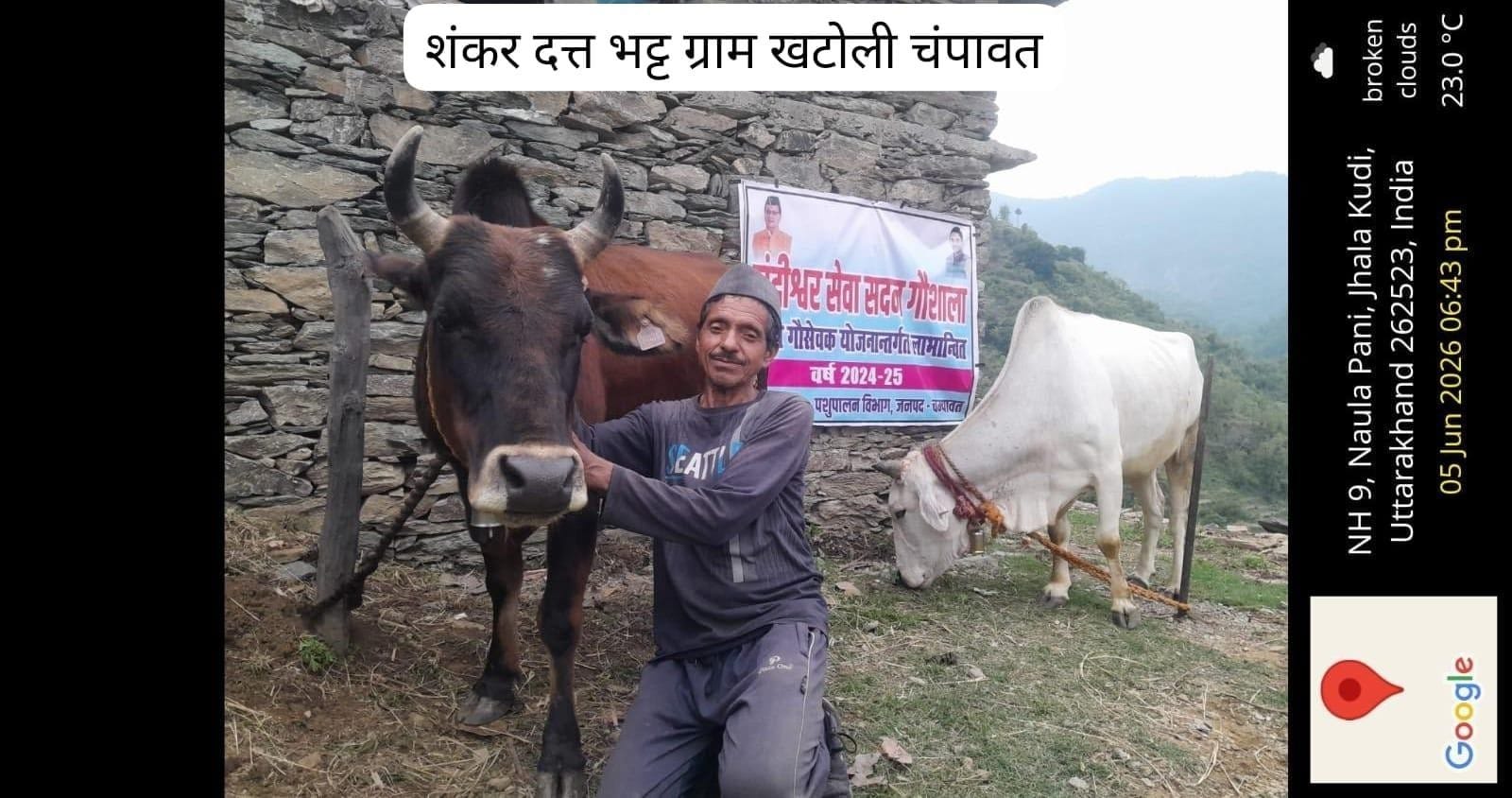
· Challenges include timely release of funds, adequate fodder availability, identification of all destitute cattle and effective monitoring.
· Limited availability of suitable land.
· Rising construction costs.
· Maintenance and recurring expenditure.
· Fodder availability during lean seasons.
· Increasing number of stray cattle.
Corrective Measures:
· Coordination with District Administration for land allocation.
· Regular monitoring by the Animal Husbandry Department.
· Promotion of convergence with Panchayati Raj Institutions and Urban Local Bodies.
· Capacity building for scientific cattle management.
Present Status and Way Forward
· The pilot project has demonstrated the potential of community-based cattle management in addressing the stray cattle problem.
· The enhancement of maintenance assistance from ₹30 to ₹80 per animal per day marks a significant policy intervention towards improving the welfare of destitute cattle in Uttarakhand.
Way Forward:
· Integrate with cattle tagging and digital monitoring systems at BPA (Bharat Pashudhan App).
· Promote community participation and owner accountability.
· Develop a sustainable model for long-term stray cattle management, animal welfare, and rural livelihood generation.
· Ensure timely release of maintenance funds.
· Introduce digital monitoring and geo-tagging of cattle.
· Promote community participation and convergence with other livestock welfare programmes.
· The ₹10 crore cess fund has provided a sustainable financial base for the upkeep of destitute cattle under the Gramya Gau Sevak Yojana.
· Going forward, the Government aims to expand the scheme to additional villages, strengthen monitoring systems, ensure timely utilization of funds and further improve animal welfare through enhanced veterinary services and community participation.
· The dedicated cess-based funding model represents an innovative and sustainable approach to protecting destitute cattle while addressing rural challenges in Uttarakhand.
· The scheme is being implemented to strengthen the infrastructure for shelter and welfare of stray cattle across Uttarakhand. Additional Gosadans may be established in districts with higher stray cattle populations.
· Future efforts should focus on convergence with fodder development, veterinary health services, cattle identification, waste-to-wealth initiatives such as biogas and organic manure production, and long-term financial sustainability of Gosadans through community participation and public-private partnerships.